Physical Address
304 North Cardinal St.
Dorchester Center, MA 02124
Physical Address
304 North Cardinal St.
Dorchester Center, MA 02124

You’ve probably scrolled through countless cute puppy photos, falling in love with fluffy faces and floppy ears. I get it. I did the same thing before getting my first dog. But here’s the problem: choosing a dog based on looks alone is like picking a car based on its color. It might look great in your driveway, but can it handle your daily commute?
Here’s a shocker: the French Bulldog has officially ended the Labrador Retriever’s 31-year reign as America’s most popular types of dogs . The AKC’s 2025 registration statistics confirm this massive shift . Meanwhile, the Cane Corso has skyrocketed from 50th place to nearly cracking the top 10 in just a decade . The types of dogs we love are changing fast.
Are you feeling overwhelmed by the sheer number of breeds out there? Or maybe you’ve already experienced the heartbreak of bringing home a puppy that turned out to be a whirlwind of destruction because you didn’t know what you were getting into. The #1 reason types of dogs end up in shelters? Choosing the wrong types of dogs for your lifestyle.
In this guide, you’ll discover the 7 AKC breed groups, learn the truth about purebreds versus mutts, and get a step-by-step system to find your perfect canine companion. By the time you finish reading, you’ll know exactly which types of dogs fit your life, energy level, and budget.
Google Trends is showing something fascinating: searches for specific types of dogs breeds are spiking across the country . But here’s where it gets interesting. Coastal cities like NYC and San Francisco are obsessed with Samoyeds, while the Midwest is going crazy for Cavalier King Charles Spaniels .
People aren’t just searching for “cute dogs” anymore. They’re searching for compatible dogs.
This guide is for you if you’ve already decided you want a dog but feel confused by the 200+ AKC-recognized breeds and the explosion of “doodle” hybrids. We’re moving past the basics into behavioral science and lifestyle matching.
Let me bust a common myth right now: “A dog’s breed determines its personality 100%.”
Not true. While genetics set the “ingredients,” the environment—training, socialization, your daily habits—chooses the “recipe.” A Border Collie has herding instincts, but a Dachshund can learn to retrieve with the right training. Breed is a tendency, not a destiny. But understanding these tendencies? That’s your secret weapon.
When someone searches “types of dogs,” they’re usually not looking to buy a dog right this second. The real intent is informational, leaning toward commercial investigation. You’re doing your homework before making a big decision.
Related terms you’ll see throughout:
Now let’s dive into the good stuff.
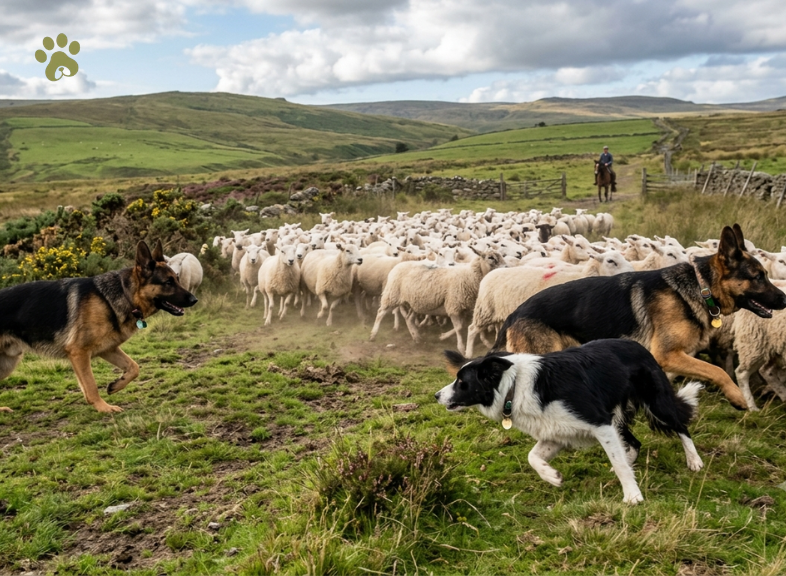
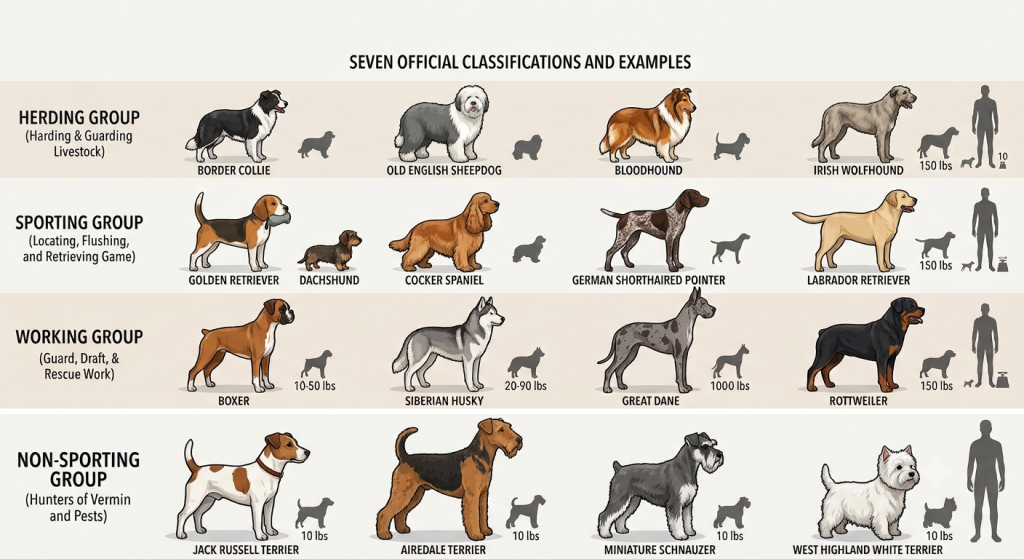
What they were bred for: Gathering, herding, and protecting livestock. These types of dogs are incredibly intelligent, athletic, and have high “prey drive” for movement .
Popular breeds: Border Collie, German Shepherd, Australian Shepherd, Corgi.
The reality check: German Shepherds and Australian Shepherds consistently rank in the top 15 most popular breeds in the US . People love them for their smarts. But here’s what nobody tells you: herding types of dogs need a job. Without mental stimulation, they’ll try to herd your kids, your cats, or even passing cars. I’ve seen it happen.
What you can do: Invest in puzzle toys and agility training. These dogs thrive when their brains are working.
Internal link opportunity: Our “Dog Training Tips” page goes deeper into mental stimulation techniques.
What they were bred for: Hounds split into two camps—Sighthounds that chase by sight and Scenthounds that track by smell. They’re independent and often stubborn because they were bred to work away from humans .
Popular breeds: Greyhound, Beagle, Dachshund, Bloodhound.
The reality check: The Dachshund is a top 5 breed in the US . Even small hunting instincts come in small packages! And Greyhounds? They’re surprisingly “couch potatoes” indoors despite their racing reputation.
What you can do: Never let a Sighthound off-leash in an unfenced area. Their chase instinct is too strong. For Scenthounds, use snuffle mats to tap into their tracking drive .
Internal link opportunity: Check our “Leash Training Guide” for tips on managing these independent thinkers.
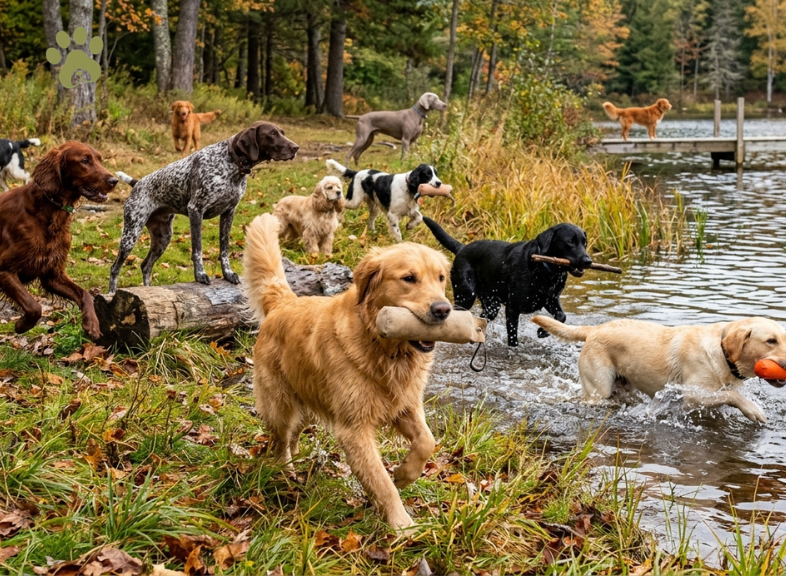
What they were bred for: Assisting hunters in retrieving birds and game. These dogs are highly trainable, loyal, and energetic. The group includes Retrievers, Pointers, and Setters .
Popular breeds: Labrador Retriever, Golden Retriever, Cocker Spaniel.
The reality check: Golden Retrievers were the most searched dog breed in 49 out of 50 US states recently, with over 22,000 monthly searches . They’re beloved for good reason.
What you can do: These dogs are “mouthy”—they love to carry things in their mouths. Provide durable chew toys to redirect their retrieving instincts and prevent destructive chewing.
Internal link opportunity: Our “Best Toys for Heavy Chewers” guide has specific recommendations.
What they were bred for: Pulling sleds, guarding property, and performing rescue. They’re powerful, alert, and courageous giants .
Popular breeds: Siberian Husky, Rottweiler, Great Dane, Boxer.
The reality check: The Cane Corso is the fastest-rising star in this group . These dogs require a firm, consistent leader. Early socialization is non-negotiable to manage their guardian instincts.
What you can do: Be honest with yourself about whether you can provide the structure these types of dogs need. They’re not for first-time owners.
Internal link opportunity: Our “Socialization Checklist” is essential reading for Working Group owners.
What they were bred for: Hunting vermin and going to ground (earth). They’re tenacious, energetic, and have a distinct “terrier” temperament .
Popular breeds: Yorkshire Terrier, Jack Russell Terrier, Bull Terrier.
The reality check: Despite their small size, Yorkies are a top 15 breed . Big personalities win every time.
What you can do: Terriers love to dig. Designate a “digging pit” in your yard or provide heavy-duty digging toys to satisfy their natural instincts.
Internal link opportunity: Our “Gardening with Dogs” page has tips for managing digging behavior.
What they were bred for: Companionship. Small in size but huge in personality .
Popular breeds: Chihuahua, Pug, Pomeranian, Maltese.
The reality check: The French Bulldog (often categorized in Toy or Non-Sporting) is currently the #1 breed in the US, with nearly 74,500 registrations .
What you can do: Toy breeds are fragile. Supervise children closely to prevent falls. They’re also prone to dental disease—brush their teeth regularly.
Internal link opportunity: Read our “Small Dog Safety Guide” for more specific advice.
What they were bred for: This is a mixed bag of breeds that don’t fit the other categories. They vary wildly in size, coat, and function .
Popular breeds: Dalmatian, Poodle, Bulldog, Shiba Inu.
The reality check: Poodles (Standard, Mini, Toy) are ranked #6, and the Bulldog sits at #10 . These types of dogs may look different, but they share a “doesn’t fit anywhere else” classification.
What you can do: Because they’re so diverse, don’t assume anything about a Non-Sporting types of dogs energy level. Research the specific breed’s history.
Internal link opportunity: Our “Breed Specific Care” page breaks down the details.
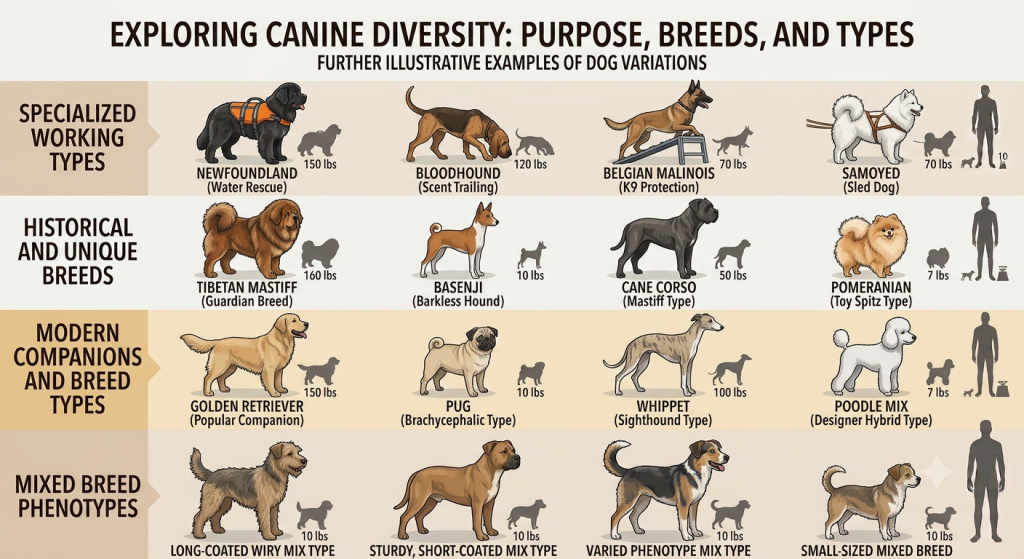
What they are: Crossbreeds between a Poodle and another breed to achieve a hypoallergenic coat .
Popular types of dogs: Labradoodle, Goldendoodle, Cavapoo.
The reality check: While the AKC doesn’t recognize “Doodles” yet, they’re one of the most sought-after types of dogs on the market . The demand is enormous.
What you can do: Don’t buy a “Doodle” thinking they’re 100% hypoallergenic. Coat types vary by litter. Meet the parents if possible.
Internal link opportunity: Our “Hypoallergenic Dog Guide” tells you what’s real and what’s marketing.
What’s the difference: Purebreds have documented lineage; Mixed breeds (Mutts) are a combination, often with less predictable traits .
The reality check: 85% of the world’s dogs are village dogs or mutts with no defined breed . Most types of dogs on the planet don’t fit into neat boxes.
What you can do: Consider adoption or find a responsible breeder. Check for health clearances (hips, eyes) to avoid genetic issues .
Internal link opportunity: Our “Adoption Guide” walks you through the process.
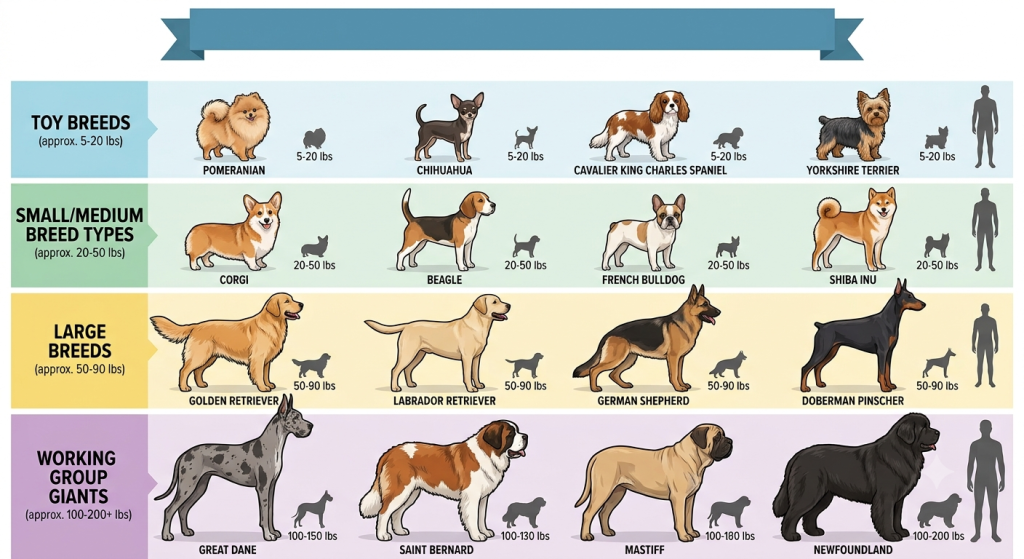
What matters most: Size (Toy under 10 lbs to Giant 90+ lbs) and energy levels (couch potato to marathon runner) .
The reality check: The French Bulldog’s rise to fame is largely due to its adaptability to city living and apartments . People want dogs that fit their actual lives.
What you can do: Be honest about your activity level. Don’t get a Husky if you only walk for 15 minutes a day.
Internal link opportunity: Check “Apartment Living Tips” for breed recommendations.
Are you a runner or a Netflix binge-watcher?
Rate your daily activity on a scale of 1 (low) to 10 (high). Match this to the breed group:
Do you have a yard or a studio apartment?
Research size constraints. Here’s something surprising: a small yard doesn’t mean you can’t have a big types of dogs . Greyhounds are actually great apartment types of dogs. But space definitely affects how you’ll plan exercise.
Large breeds often have higher food costs and joint issues. Set aside a “vet fund.” Research breed-specific health issues—for example, Frenchies can have breathing problems, and large breeds are prone to hip dysplasia .
Know the difference:
Be realistic about shedding. If you hate vacuuming, avoid heavy shedders like Labs.
Does the breed tolerate children or cats?
Look for “soft-mouthed” breeds (Retrievers) for kids. Avoid high-prey-drive dogs (Terriers) for multi-pet households.
| Breed Group | Primary Job | Energy Level | Trainability | Grooming Needs | Best For |
| Herding | Livestock Management | Very High | 5/5 (Genius) | Medium | Active Families, Farms |
| Hound | Tracking/Hunting | Medium | 2/5 (Stubborn) | Low | Scent enthusiasts, relaxed owners |
| Sporting | Bird Retrieval | High | 4/5 (Eager) | Medium | Active Individuals, Hunters |
| Working | Guard/Pull | High | 3/5 (Assertive) | Medium | Experienced owners, Security |
| Terrier | Vermin Hunting | Very High | 3/5 (Feisty) | Medium/High | Determined owners |
| Toy | Companionship | Low | 4/5 (Clever) | High (often) | Apartment dwellers, Seniors |
| Non-Sporting | Varied | Varied | Varied | Varied | Depends on specific breed |
Pros:
Cons:
Pros:
Cons:
| Care/Maintenance | Common Mistakes | Tools/Resources | Where to Find |
| Double Coat Care: Needs brushing 3x/week to avoid mats and reduce shedding | Mistake: Shaving a double-coated dog. Solution: Brush and use an undercoat rake instead; shaving ruins their insulation | Free: AKC Breed Profiles (akc.org). Paid: Wisdom Panel DNA tests for mixed breeds | Communities: Reddit r/dogs, local breed-specific Facebook groups |
| Dental Health: Toy breeds need daily teeth brushing to prevent disease | Mistake: Overfeeding table scraps. Solution: Stick to vet-approved portion sizes; obesity is a top killer | Free: Vet checkups. Paid: Interactive puzzle toys (e.g., Kong, Nina Ottosson) | Stores: Chewy.com, local pet stores, or directly from breeders’ clubs |
| Exercise Needs: Sporting dogs need 60+ mins of intense exercise daily | Mistake: Under-exercising working breeds leading to destructive behaviors. Solution: Schedule mental stimulation (training sessions) as well as physical | Free: Sniffspot (rent a yard). Paid: Dog training apps like Dogo | Links: AKC, UKC, and local shelters like Petfinder |
If you want two puppies, don’t get them from the same litter. Experts warn they can bond so strongly to each other that they fail to bond with you, leading to severe aggression and anxiety later. Adopt one, train it, wait a year, then get the second.
If you don’t give a Cane Corso or Malinois a “job,” they’ll create one—usually destroying your house. But a “job” doesn’t mean herding sheep. It can be competitive obedience, “scent work” classes, or even advanced trick training.
Even with purebreds, genes can skip generations. Don’t assume a dog is 100% healthy just because it’s registered. Always ask for OFA (Orthopedic Foundation for Animals) hip and elbow scores.
What are the 7 main types of dogs breeds?
The American Kennel Club (AKC) categorizes dogs into seven groups: Herding, Hound, Sporting, Working, Terrier, Toy, and Non-Sporting .
The French Bulldog is the most popular breed for the fourth year in a row .
Sporting breeds like Labradors or Golden Retrievers are often recommended due to their forgiving nature and high trainability .
Smaller breeds (Toy and small Terriers) tend to live 15+ years, while giant breeds live closer to 7-10 years .
A purebred has a documented lineage of the same breed; a mixed breed (mutt) has parents of two or more different breeds .
They’re considered Hybrids—a cross between a Poodle and another breed, often bred for a hypoallergenic coat .
Look for lower-energy dogs like Greyhounds (surprisingly lazy), French Bulldogs, or smaller Toy breeds .
Assess your lifestyle: daily activity level, home size, budget, and grooming tolerance. Match a breed group to these variables.
Yes. Herding breeds nip heels, Scenthounds follow noses, Terriers dig, and Toy breeds often bark more .
Over 200 breeds are recognized by the AKC , but there are over 600 types globally, including landraces and village dogs .