Physical Address
304 North Cardinal St.
Dorchester Center, MA 02124
Physical Address
304 North Cardinal St.
Dorchester Center, MA 02124

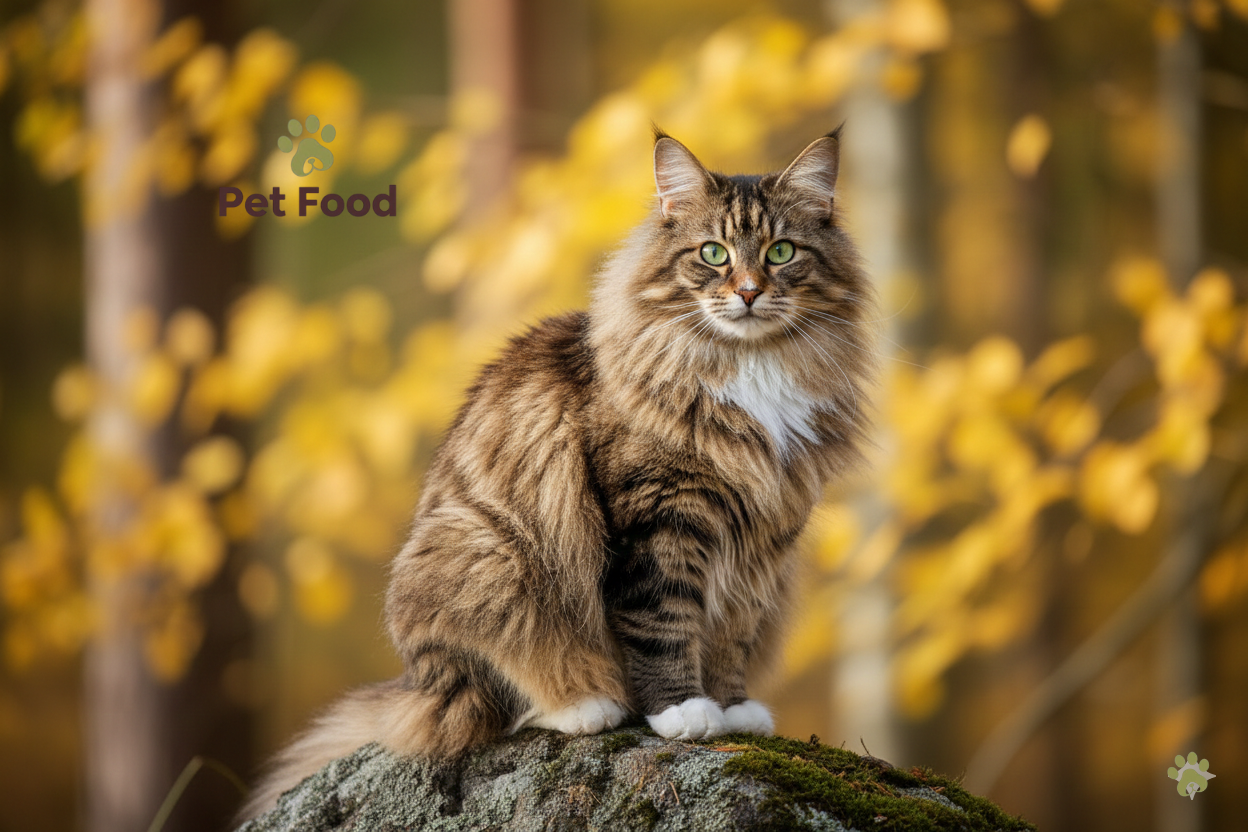
Norwegian forest cat is a cat that is shrouded with Scandinavian myths and toughened by severe winters in the North. It is known in its homeland as the Skogkatt; it was a natural breed i.e. its physical appearance was not formed by nature by the process of its selection by humans. Norwegian forest cat is not an ordinary pet, it is a biological miracle.
Historical and genetic mapping records show that the ancestors to the norwegian forest cat might have been short haired cats that were brought in by Vikings in Norway in 1000 AD. Over the course of centuries these cats have acclimatised to the sub arctic climate developing the thick and double layered and water repulsive fur that was the main feature of the breed in modern times.
The sheer structural integrity is the only difference between the norwegian forest cat and the other long haired breeds. It is a cat which is built in the vertical world. Out in the Norwegian mountains which are rocky, one could only give life to himself by being able to pass through rocky outcroppings and pine forests.
This history has taught the norwegian forest cat a very specific repertoire of behaviour including the ability to climb down trees head-first in a spiralling fashion- common to an exceedingly small number of feline species in the world. The norwegian forest cat is the national cat of Norway today, the name of the cat provided by the king Olav V, as it is virtually culturally popular.
On the part of temperament, the norwegian forest cat is the best example of a friendly giant. They are also reported to be very stoic, they do not need much attention to be brought to their senses with a lot of shouts but they are very faithful to their human families. This breed has a low maturity rate and this is among the most crucial factors that should be put into consideration by a potential owner.
A norwegian forest cat will require a life span of about five years to reach maturity in terms of physical or emotional wellbeing. It is a lengthy gestation period, thus when you have a large animal on your hands, it may take many years to watch them lose that kittenish playfulness as is the case with the ordinary house cat.
When scientists think of the analogy of the norwegian forest cat, and the maine coon, they think about the type- physical appearance which makes the breed. They both are huge, but shaggy haired and warm in the winter, only you have to know where to look to realise that the differences are huge. The debate that has the greatest impact is the one concerning the head shape between the maine coon and the norwegian forest cat.
The norwegian forest cat also possesses a triangle that is near-perfect of the form of the head. Down the forehead and the nose their profile runs. The Maine Coon, on the contrary, does not have a typical stop button or line in the profile and its muzzle is far larger and squarer and commonly known as a matchbox snout.
The other significant aspect of the norwegian forest cat and maine coon comparison is the coat. The norwegian forest cat has a two-coat that is somewhat oil-like to the feel of it–that is to say, the waterproof protector hair, or the hair which keeps off the snow and rain. The Maine Coon coat is still more dishevelled, rough and smooth, and not so thick a coat of woolly undercoat as the norwegian forest cat. Besides, the norwegian forest cat contains eyes which are almond shaped and positioned at oblique angle that makes them a look of alertness and wildness. The Maine Coon has round eyes which are also farther apart.
The norwegian forest cat vs maine coon dynamic on personality would be described as The Observer vs. The Participant.” Maine Coons are also said to be “clownish” and will always find their way into the scene of any activity that the owner is engaged in. The norwegian forest cat is the affectionate animal, though a companion at a distance. They would like to sit with you in the same room, perhaps on the highest shelf they can think of, and survey their kingdom. They do not always need to be reassured and are not dependent in thinking which makes them ideal to the owner who likes a cat that has a strong sense of self.
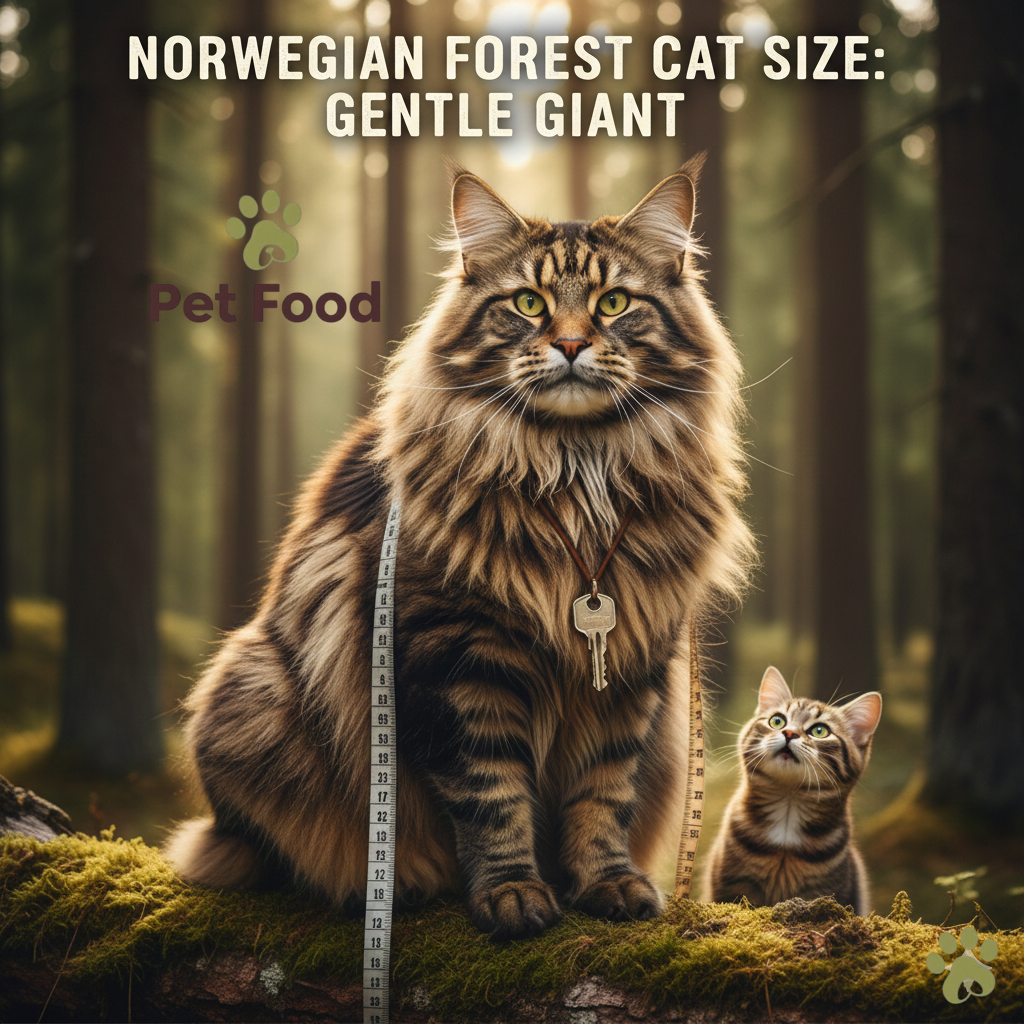
We are talking of the norwegian forest cat size when we are talking about one of the biggest frames in the domestic cat world. A female norwegian forest cat in maturity weighs within the range of 12 and 22 pounds but very huge ones may weigh more. Females are smaller though strong and they usually weigh between 9 and 16 pounds. However, the weight does not measure well the size of the norwegian forest cats of the fact that the bulk of it exists because of the skeletal structure and the high muscles.
The norwegian forest cat is made with power skeletal. They are heavy bodied, long and have a deep chest and strong legs. One of the most interesting facts concerning the norwegian forest cat cat size is the relationship between the length of the hind legs, when compared to the front ones. They have very long hind legs and hence appear sloped when they stand. This is the physical aspect that causes them to be shot into super normal leaping strength. The norwegian forest cat can jump to a top of a refrigerator or an exceptionally high door with a very little trouble.
In addition to this, their winter coating makes the cat size of norwegian forest aesthetically magnified. During the most bitter months they grow a tremendous ruff round the neck, and have two ruffs upon the hind legs. The other fur can also make the cat appear nearly twice as heavy as it really is. This means that grooming is not an element of care that can be compromised to the owners. A cat so large in quantity of fur might make painful matting unless taken care of at frequent intervals.
To know the price of norwegian forest cat, it is important to examine ethics and logistics of high-end cat breeding. The estimated cost in 2026 of a pet-quality TICA-registered kitten with a CFA-registered breeder in Norway is between $1,200-2000 as a pet-quality forest cat. When you find an animal of the show quality, having a perfect pedigree, the price of norwegian forest cat can simply go up to 3,500 and higher. This price includes the comprehensive genetic testing which good breeders do to ascertain the well being of the genes.
What is the high price of the norwegian forest cat? Well-conducted breeders spend a lot of money on the screening of Glycogen Storage Disease IV (GSD IV) and Hypertrophic Cardiomyopathy (HCM). Every time these screenings are done, it is costly yet necessary to the survival of the breed. Also, a responsible breeder will retain the kittens to 12 to 16 weeks of age, where they will be fully vaccinated, socialised, and physically prepared to move out of their mother. You are paying a premium price norwegian forest cat as a token of peace of mind in that your cat has had the best possible beginner in life.
In addition to the initial purchase there is the tax of ownership of this breed. Due to their size and activity degree, the norwegian forest cat needs high-protein diet with meat content to sustain the muscle mass. This breed can get obese and become diabetic as a result of cheap fillers. Thus, you will spend more on food each month than you would spend on a less active small cat. In estimating the overall norwegian forest cat price with 15 years of life, the owners must expect investing in such a wonderful-value animal as it is premium.
| Category | Estimated Cost (USD) |
| Initial Purchase Price | $900 – $1,500 |
| Annual Veterinary Care | $200 – $400 |
| Monthly High-Protein Diet | $40 – $70 |
| Large Climbing Trees | $150 – $300 |
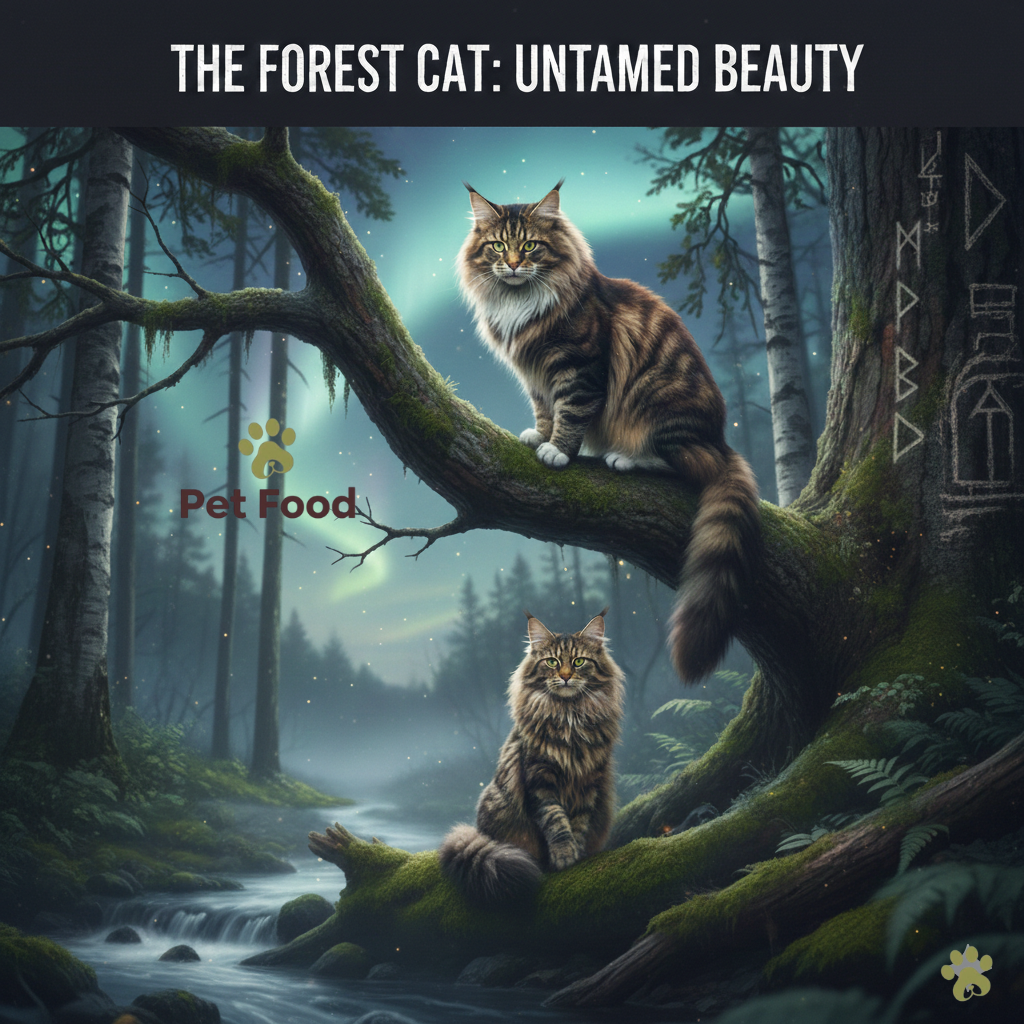
The forest cat is not simply a name, it is a description of the soul of the animal. The norwegian forest cat was an expert in the up and down world. Their claws are extremely strong and dense and they can easily grab tree barks. It is also the case with this forest cat being one of the few breeds that actually like the outdoors, however, in a contemporary home environment an environment of access to the outside must be closed in (like a catio) to ensure these cats are not exposed to traffic and predators.
They are pure forest cats and thus have the best taste in matters that regard hunting. They are sit and wait predators, and are very patient. This is transferred into domestic play, a norwegian forest cat will frequently take ten minutes looking at a toy and then one decisive, powerful pounce. They are also said to have a preference towards water. Their forest cat is seen to be batting water in the sink or even attempting to join them in the shower, by many owners. Probably this is a remnant of the fjord fishing of their predecessors in Norway.
Being surrounded by a forest cat implies a certain degree of wildness. They are very smart and they require mental stimulation. A bored norwegian forest cat may be destructive with its massive strength tearing cabinets apart or re-modelling your furniture. It is necessary to provide puzzle feeders, high-perched beds, and interactive toys. They are not the kind of lap cat, as such; they are roommates. They desire to feel that they are part of the action, but on their conditions.
Viewing norwegian forest cat images, the viewer is spared of the first glance of the breed and the wild appearance it has. They have the piercing, intelligent look in their eyes which are usually beautifully photographed in high-resolution cat pictures in the Norwegian forest. The visual variety of the breed is unbelievable due to the number of colours they exist in–white, black, blue, red, cream, silver, and golden. The colours that are prohibited in the breed standards are only the ones that signify a hybrid e.g. chocolate or lilac or the pointed effect of the Siamese cats.
The professional norwegian forest cat pictures are frequently concentrated upon the lynx tips, or the tufts at the ends of the ears, and the snowshoes, or the lumps of thick fur between the toes. These attributes are not mere displays but they had practical uses in the snow. During winter, norwegian forest cat images depict the breed in its best glory as the fully grown, thick coat with a ruff which makes it look just like a lion is in full display. This seasonal change is among most exhilarating things about having the breed as the cat one sees in the summer is a totally different animal at the winter.
To owners, it can be difficult to take norwegian forest cat pictures due to their fondness of heights. A norwegian forest cat would be more likely to be on top a bookshelf than on the sofa. But these altitude poses give some of the most dramatic and beautiful pictures in norwegian forest of any. The length of their bushy tails, which are as long as their bodies between the base and neck, furnish an ideal wrap-about “scarf” when curled, and make the ideal picture of pure feline snugness.
Norwegian forest cat will be a healthy animal that needs nutrition as the priority in order to stay healthy. Due to the size of norwegian forest cats, these creatures need a food that would sustain high bone density and muscle density. The owners should seek foods in which the initial three ingredients are animal based proteins. Taurine is an essential amino acid needed when it comes to the health of the heart because the breed is predisposed to HCM.
The second pillar of care is grooming. Although the norwegian forest cat has a better self-grooming behaviour than many long-haired breeds as they clean themselves with the help of their outer coat, they still need human interventions. The undercoat will not be matted as a result of a weekly encounter with a wide-toothed comb. It is necessary to brush them daily during the spring blowout when they shed their cumbersome winter coat. Otherwise, you will see your home infested with the tumbleweeds of fur, and your norwegian forest cat can be covered with serious hairballs.
Lastly, dental health is not well thought in large breeds. The norwegian forest cat is likely to have gingivitis. The best way of making sure that they do not need to undergo costly and traumatising dental procedures in their later years is to start a tooth-brushing habit when they are still in their expensive kitten-hood. paired with frequent checkups at the vet to cheque signs of genetic disorders, this preemptive strategy will keep your “forest cat” alive and well as a member of your household well into its 20 th year.
Norwegian forest cat is a work of art a combination of primal and civilized survival instincts and domestic love. They may be attracted by the fact that the cat of norwegian forest is the biggest or that there is also a curious history to this breed, however, it is impossible to deny the specific charm of the breed. Although the norwegian forest cat price and grooming needs are a huge obligation, the payoff is a faithful, smart and unbelievably beautiful pet.
Getting a feel of the details of the norwegian forest cat vs maine coon and being in awe of the beautiful visual legacy of the norwegian forest cat family in pictures, the owners can immerse themselves in the life experience of having these North legends.
The data that is provided in this article relating to norwegian forest cat is simply informative. It is not applied to replace licenced veterinary service, diagnosis and treatment. There is no need to reconsider calling your veterinarian and purotracting him or her with any inquiries about the medical status of a given pet. The vague peculiarity of the breed is the size of norwegian forest cat and predisposition to health which may not be relevant to all cats.
The norwegian forest cat size is substantial. Males typically reach 12–22 lbs, and females reach 9–16 lbs. They are among the largest domestic cat breeds, known for their powerful, muscular build.
2. Is the Norwegian Forest Cat price worth it?
The norwegian forest cat price (typically $1,200–$2,000) reflects the cost of health screenings for genetic diseases like GSD IV and HCM. Buying from a reputable breeder ensures a healthier, better-socialized pet.
3. What is the difference in Norwegian Forest Cat vs Maine Coon?
The norwegian forest cat vs maine coon comparison boils down to head shape and coat. Wegies have a triangular head and a straight profile, while Maine Coons have a boxy muzzle and a concave profile.
4. Are they good with children and other pets?
Yes, the norwegian forest cat is famously patient and gentle. Their stoic nature makes them excellent companions for children and they generally coexist peacefully with dogs.
5. How much do they shed?
They shed moderately year-round, but they have a massive “blowout” in the spring and fall. During these times, daily grooming is required to manage the volume of fur.
6. Do Norwegian Forest Cats like to climb?
Absolutely. As a natural forest cat, they have an instinctual need to be high up. They have exceptionally strong claws and hind legs for vertical movement.
7. Are there specific health problems I should watch for?
The breed is prone to Hypertrophic Cardiomyopathy (HCM), Hip Dysplasia, and Glycogen Storage Disease IV. Regular vet check-ups are essential.
8. Can I find a Norwegian Forest Cat in a shelter?
While rare, it is possible. However, many cats labeled as Wegies in shelters are simply long-haired mixes. A purebred norwegian forest cat is usually obtained through specialized rescues or breeders.
9. What color are their eyes?
According to norwegian forest cat pictures and standards, their eyes are usually shades of green, gold, or copper. White Wegies may have blue eyes or odd eyes (one blue, one gold).
10. How long do they take to grow up?
A norwegian forest cat is a slow-maturing breed, taking up to 5 years to reach full physical and mental maturity.




Monetize your audience—become an affiliate partner now!