Physical Address
304 North Cardinal St.
Dorchester Center, MA 02124
Physical Address
304 North Cardinal St.
Dorchester Center, MA 02124

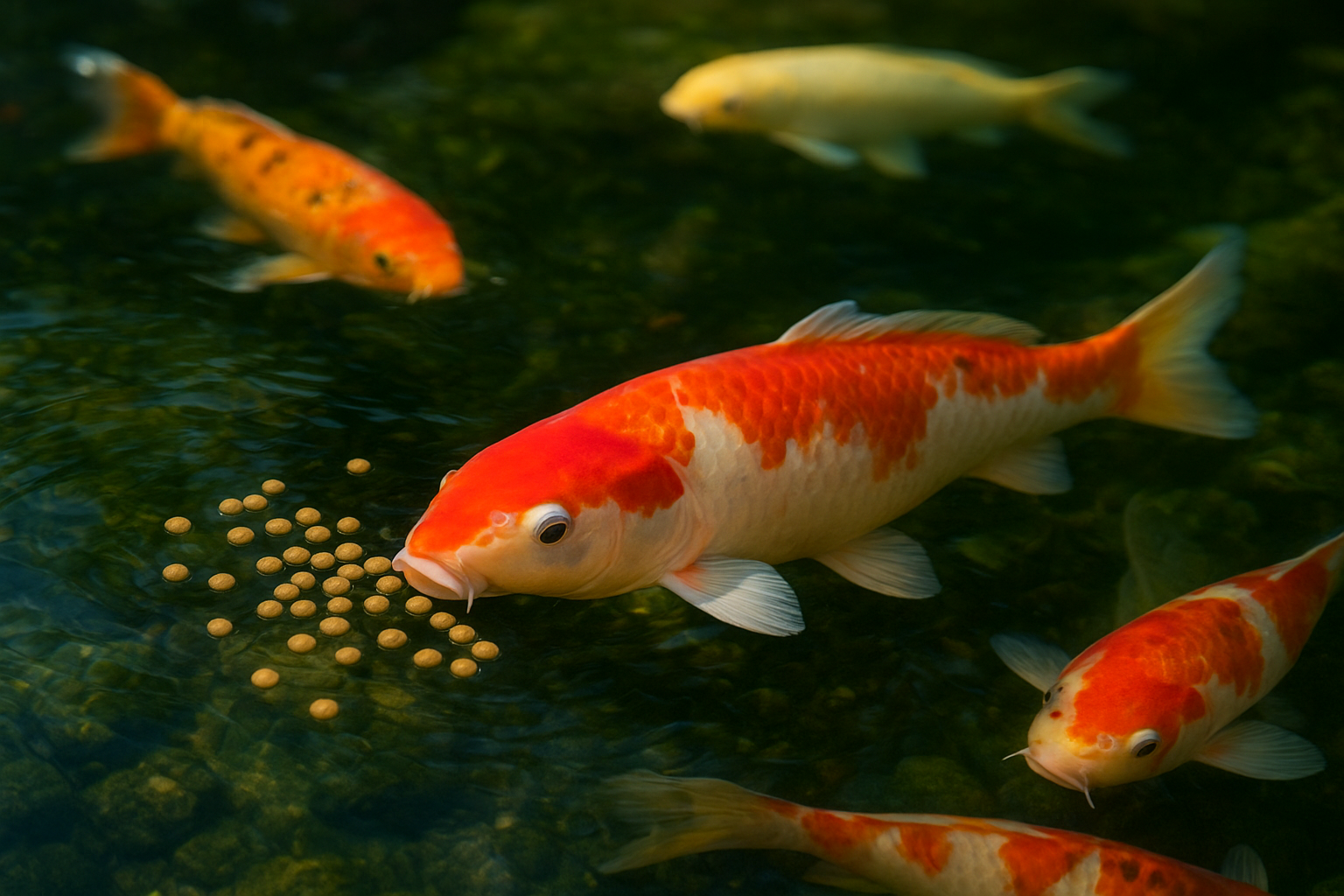
Taking care of koi fish is more than just a daily chore; it’s one of the best ways to keep them healthy, colorful, and long lived. To know what food is best for koi fish, you need to know what they like to eat, when they eat it, and how food affects their energy and looks.
People love koi because they are graceful and colorful, but their beauty doesn’t happen by accident. It comes from getting the right amount of care, water, and food. Let’s take a closer look at what makes the best food for koi fish, how to feed it right, and what to stay away from to keep your pond healthy and happy.
Koi eat both plants and animals, so they are omnivores. They eat algae, tiny bugs, and other organic matter in the wild. But in ponds, they only eat what you give them. That’s why it’s so important to choose the best food for koi fish. It has a direct effect on their health, growth, and color development.
High quality koi food is made to be like the food they would eat in the wild. It has proteins that help muscles grow, natural fats that give you energy, and vitamins that help your immune system. When koi get the right amount of nutrients, their fins look fuller, their movements are more graceful, and their colors bring a lot richer.
When you think about what to feed koi fish, think of it like making a balanced meal for an athlete. Protein is the most important thing because it helps koi grow strong and keep their muscles toned. Fats give you energy, and carbohydrates give you energy for your daily activities without making your digestion work too hard. Minerals and vitamins work quietly in the background to keep koi looking beautiful by strengthening their scales, boosting their immune systems, and keeping their glow.
The texture and how easy it is to digest food are also important. Because koi don’t have stomachs, their food has to be easy to digest. Eating bad food can quickly make you feel bloated or stressed out, which can make you tired and lose color. The best koi food always dissolves slowly, which makes it easy for the fish to absorb and keeps the water clean.
The best food for koi fish changes with the seasons. The temperature of the water affects how koi digest food and how quickly they do it.
When koi are most active in the spring and summer, high-protein food helps them grow and gives them energy. In the summer, koi swim a lot, breed, and show off their brightest colors, so they need meals that are full of nutrients. Food made with fish meal, shrimp, and spirulina helps both growth and color.
Koi slow down when fall comes and the weather starts to cool down. Wheat germ-based food is the best choice at this time. It doesn’t upset their stomachs and helps them store energy for the winter. When the temperature drops below 50°F (10°C), koi should not be fed at all or very little because their metabolism slows down. At this point, feeding them can make food inside them rot, which can cause serious health problems.
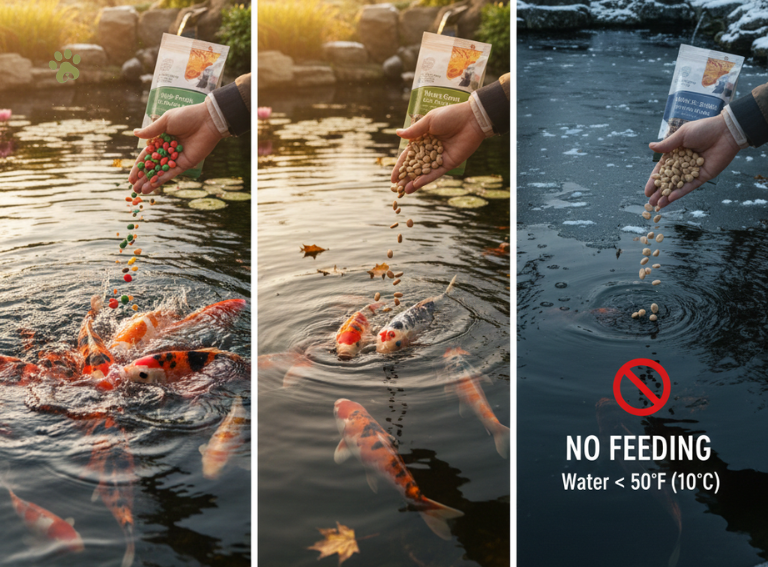
The way you feed koi fish matters, even if you know what the best food is for them. Koi do best when things are the same. Feeding them at the same time, once or twice a day, teaches them to eat slowly and all of it. Watching them eat also helps you spot early signs of illness, like moving slowly or not wanting to eat.
It’s best to give your koi small amounts of food that they can eat in a few minutes. Food that isn’t eaten breaks down quickly, making the water cloudy and lowering its quality. You need both clean water and a balanced diet. No matter how healthy the food is, it can’t make up for bad water conditions.
The ingredients are the key to finding the best food for koi fish. Fish meal, krill, and shrimp are some of the best natural sources of protein for koi. These ingredients help muscles grow and give them bright colors. Spirulina, a type of algae, naturally makes red and orange colors more colorful, and wheat germ helps with digestion.
Cheap foods often have artificial fillers and dyes in them. They may seem good at first, but they don’t add much to your nutrition. They can make your koi’s colors less bright and make them produce more waste over time. The best diets for koi are simple, pure, and based on real, nutrient-dense foods that koi would eat in the wild.
Koi fans trust some foods because they work well and are of good quality. Hikari, Blue Ridge, and Dainichi are all brands that professional breeders and hobbyists like to talk about. Each one has a range that is good for digestion, growth, and color enhancement. By picking a brand that is well-known and has good reviews, you can be sure that your koi will get the same food every time without any harmful chemicals.
The best food for koi fish depends on the size of the koi, the temperature of the pond, and the koi’s lifestyle. The right food makes them more alert, interactive, and full of life.
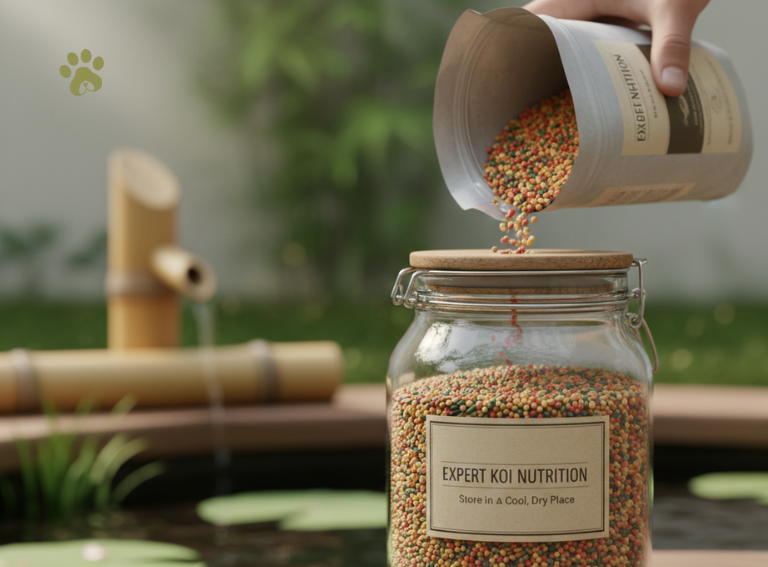
Knowing what to feed your koi fish is only part of being a good koi owner. How you store and feed your pet is just as important. To keep the nutrients in koi food, it should always be kept in airtight containers, away from light and moisture. When food gets old, its proteins and vitamins start to break down.
Feeding should also be a calm part of the day. Don’t feed koi when it’s really hot outside or when it’s really cold in the morning, when their digestion is slow. The best times to feed koi are in the middle of the morning and late in the afternoon, when the water is stable and the fish are most active.
To find the best food for koi fish, you need to know how they live, what they eat, and how they act. Following trends won’t help. If you feed your koi the right mix of nutrients, it will give you bright colors, smooth movement, and years of friendship.
You make more than a pond when you feed them good food every day, watch how they behave, and change things up with the seasons. You make harmony. So think carefully about your choice. If you care about your water garden, buy nutrition that show it. You’ll see the results in every corner of your garden.
The information provided in this guide is for educational and informational purposes only. While every effort has been made to ensure the accuracy of the advice regarding Koi fish nutrition, seasonal feeding, and water maintenance, please keep the following in mind:
1. Question: Why is choosing the right food so important for Koi fish?
Answer: Proper nutrition is the foundation of their health. It directly affects their growth, immune system strength, and the vibrancy of their colors. High-quality food mimics their natural diet to keep them active and long-lived.
2. Question: Are Koi fish herbivores, carnivores, or omnivores?
Answer: Koi are omnivores. In the wild, they eat a variety of both plant and animal matter, including algae, small bugs, and other organic material.
3. Question: What is the most important nutrient for a Koi’s growth?
Answer: Protein is the most critical nutrient. It helps Koi grow strong, keeps their muscles toned, and ensures their fins look full and healthy.
4. Question: How should I change their diet during the summer?
Answer: During summer, Koi are most active and need high-protein food (containing fish meal or shrimp). This provides the energy they need for swimming, breeding, and developing bright colors.
5. Question: What kind of food should be given in the fall?
Answer: When temperatures drop, switch to wheat germ-based food. It is much easier for Koi to digest as their metabolism slows down, helping them store energy for winter without causing stomach upset.
6. Question: Why should you stop feeding Koi when the water is below 50°F (10°C)?
Answer: At these low temperatures, a Koi’s metabolism nearly stops. If they eat, the food can rot inside their digestive tract, leading to serious health issues or death.
7. Question: Which ingredients help enhance the red and orange colors of Koi?
Answer: Natural ingredients like Spirulina (algae), shrimp meal, and krill are excellent for strengthening the pigments in their scales without using artificial dyes.
8. Question: What are the risks of using cheap, low-quality fish food?
Answer: Cheap foods often contain artificial fillers and dyes. These provide little nutrition, can dull the fish’s natural colors, and create more waste, which pollutes the pond water.
9. Question: How many times a day should you feed your Koi?
Answer: In warm weather, feed them once or twice a day. Give them only what they can finish in a few minutes to prevent leftover food from rotting and making the water cloudy.
10. Question: What is the best way to store Koi food to keep it fresh?
Answer: Store food in airtight containers away from direct light and moisture. This prevents the proteins and vitamins from breaking down and ensures the food remains nutrient-dense.


https://shorturl.fm/s5g6Y
https://shorturl.fm/MAp8H
https://shorturl.fm/CMXuG
Turn your network into income—apply to our affiliate program!